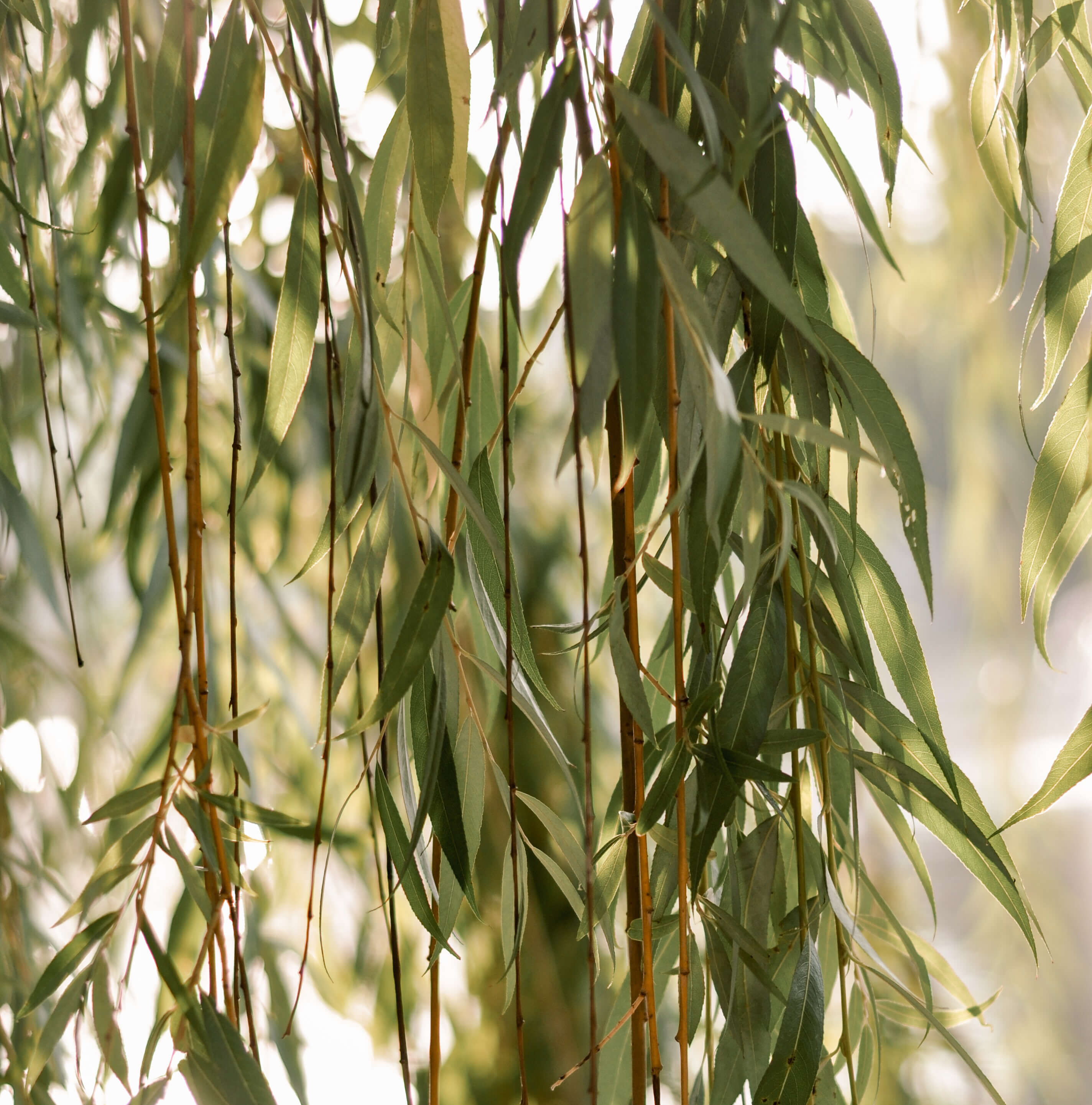
Understanding the Willow Tree
Willows, also called sallows and osiers, form the genus Salix, are around 400 species of deciduous trees and shrubs, found primarily on moist soils in cold and temperate regions of the Northern Hemisphere. Most species are known as willow, but some narrow-leaved shrub species are called osier, and some broader-leaved species are referred to as sallow (from Old English sealh, related to the Latin word salix, willow).
Some willows (particularly arctic and alpine species) are low-growing or creeping shrubs; for example, the dwarf willow (Salix herbacea) rarely exceeds 6 cm (2.4 in) in height, though it spreads widely across the ground.
Willows all have abundant watery bark sap, which is heavily charged with salicylic acid, soft, usually pliant, tough wood, slender branches, and large, fibrous, often stoloniferous roots. The roots are remarkable for their toughness, size, and tenacity to live, and roots readily sprout from aerial parts of the plant.
The scientific use of the genus name Salix originates with Carl Linnaeus in 1753. The modern concept of types did not exist at the time, so types for Linnaeus' genera had to be designated later. The type species, i.e., the species on which the genus name is based, is Salix alba, based on a conserved type.
The generic name Salix comes from Latin and was already used by the Romans for various types of willow. A theory is that the word is ultimately derived from a Celtic language, sal meaning 'near' and lis meaning 'water', alluding to their habitat.