POSTER
TYPE DESIGN
TOOLS USED: 

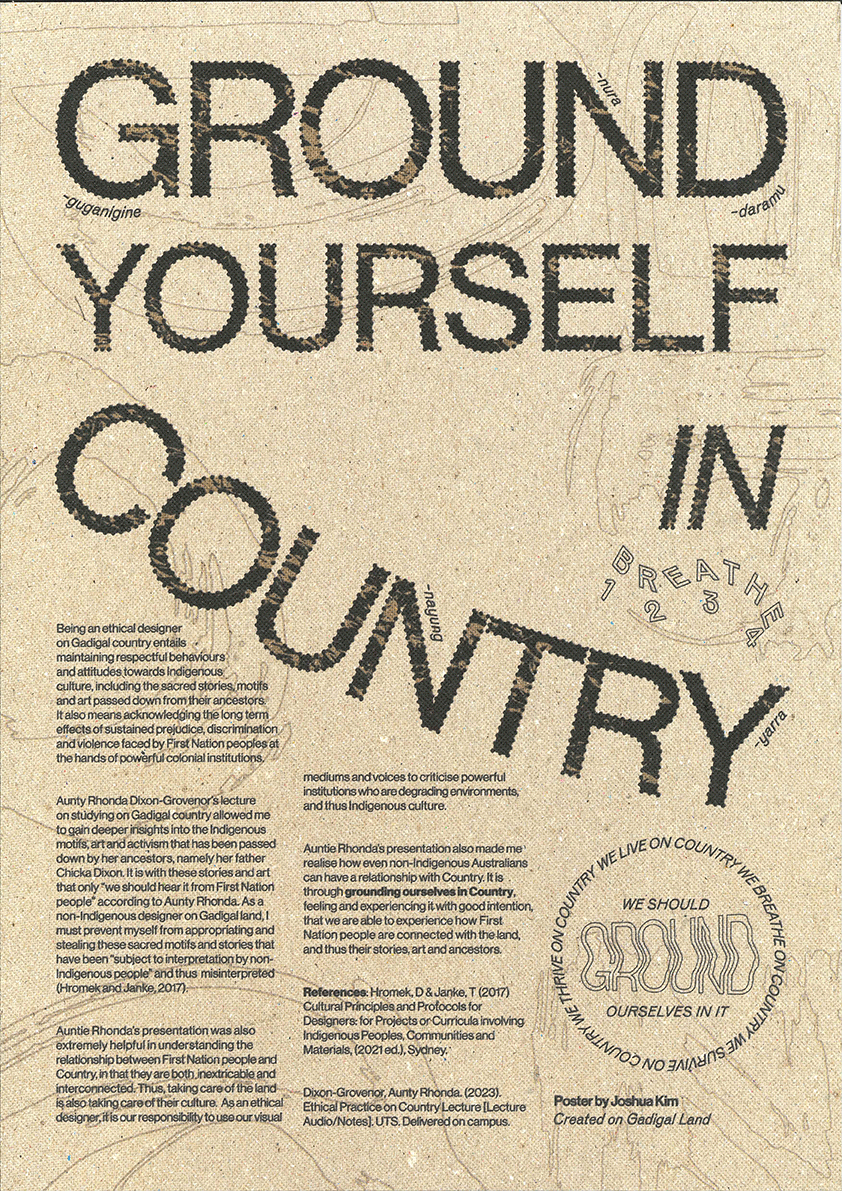
Ground Yourself In Country
We should ground ourselves in Country.
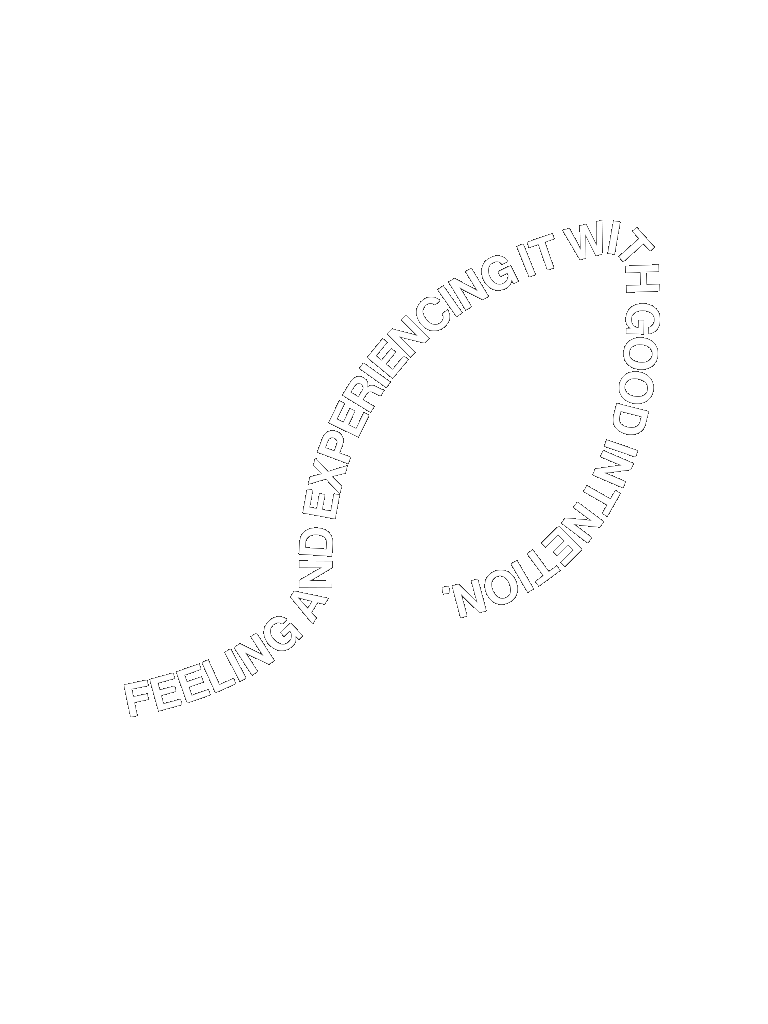
Inspired by Aunty Rhonda's lecture, 'Ground Yourself In Country' is a poster created on Gadigal land using UV printing on a thick and textured board. The poster references several keywords related to Country in Dharug language, as a way to acknowledge the importance of Country to First Nation peoples and how with their land, their language has also been diminished by colonisation. The poster also includes a reflection on the importance of acknowledging the original custodians of Gadigal land when designing on it. You can find the reflection here.
MOODBOARD
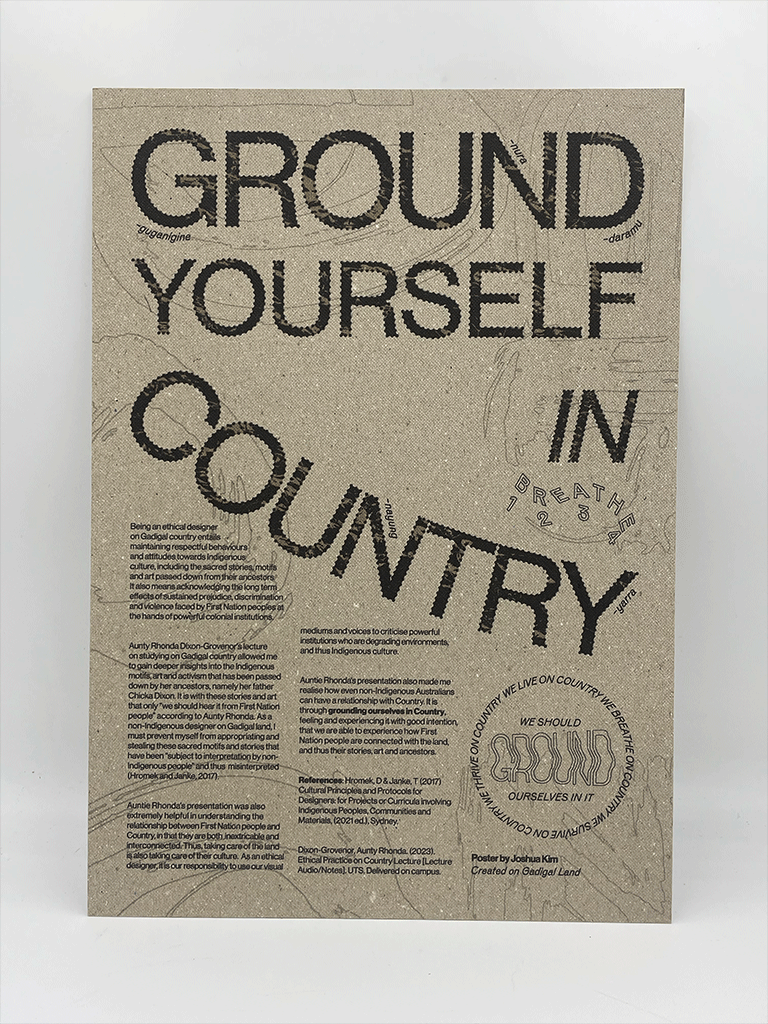
This was my moodboard for my poster design, taking inspiration from designers such as PrettyCoolStrangers and Stxrling Stxdio
ASSETS
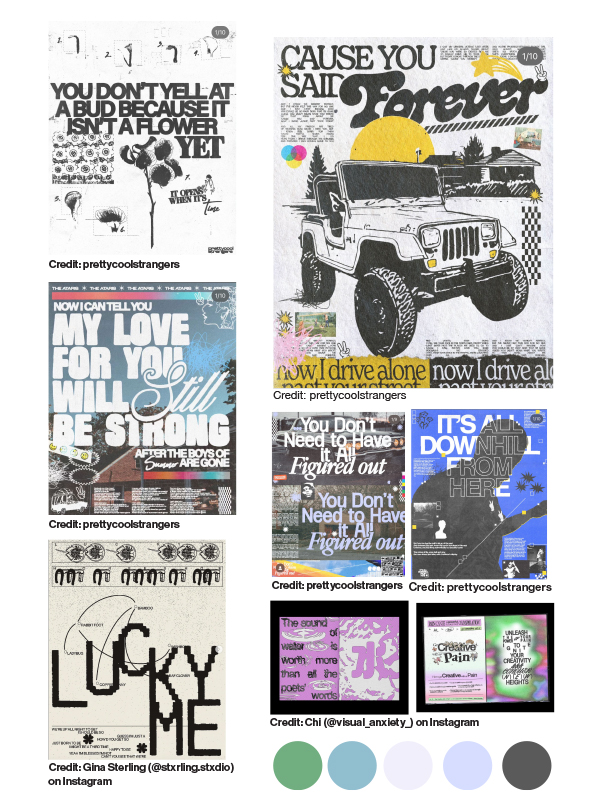
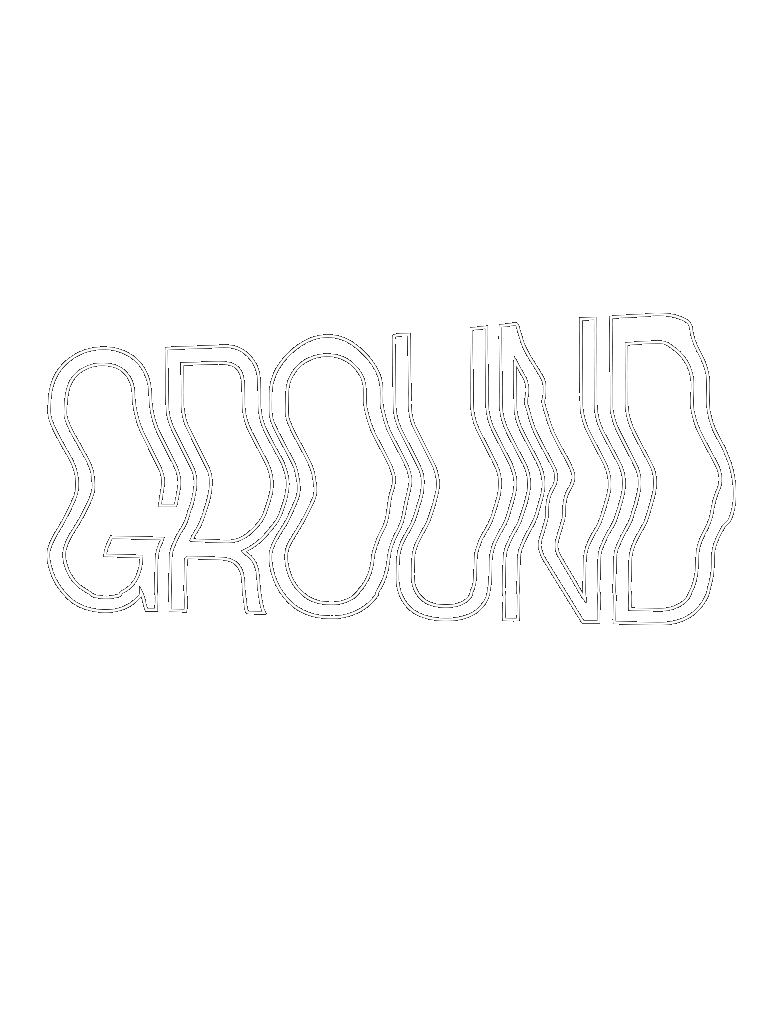
These are some assets I created for the poster, digitising hand generated type with ink and scans to distort type.

SCANS
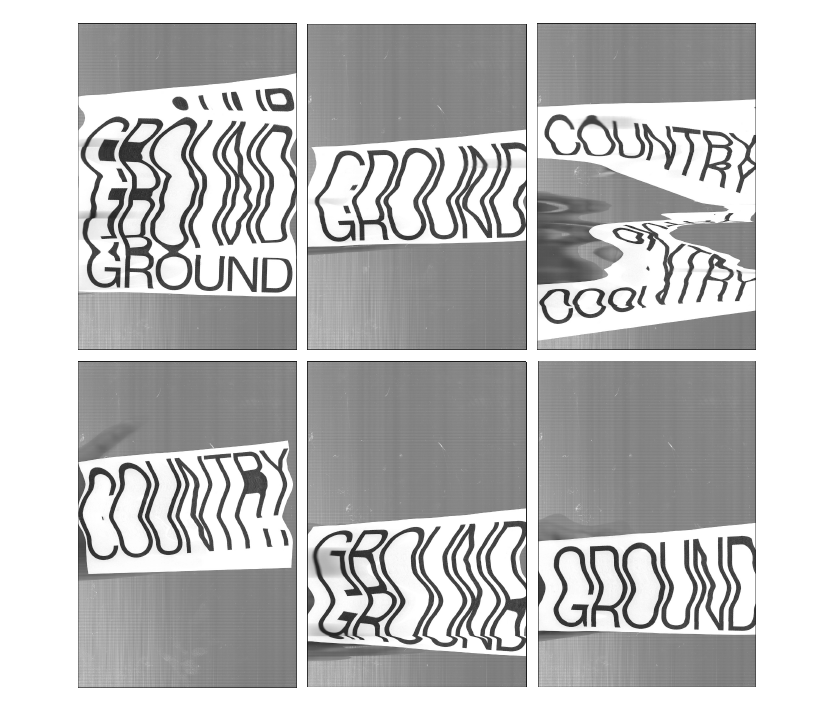
Some scans that were generated for this project, using the keywords 'Country' and 'ground' to create interesting type-as-image experiments.
REFLECTION
Being an ethical designer on Gadigal country entails maintaining respectful behaviours and attitudes towards Indigenous culture, including the sacred stories, motifs and art passed down from their ancestors. It also means acknowledging the long-term effects of sustained prejudice, discrimination and violence faced by First Nation peoples at the hands of powerful colonial institutions. Aunty Rhonda Dixon-Grovenor’s lecture on studying in Gadigal country allowed me to gain deeper insights into the Indigenous motifs, art and activism that has been passed down by her ancestors, namely her father Chicka Dixon. It is with these stories and art that only “we should hear it from First Nation people” according to Aunty Rhonda. As a non-Indigenous designer on Gadigal land, I must prevent myself from appropriating and stealing these sacred motifs and stories that have been “subject to interpretation by non-Indigenous people” and thus misinterpreted (Hromek and Janke, 2017). Auntie Rhonda’s presentation was also extremely helpful in understanding the relationship between First Nation people and Country, in that they are both inextricable and interconnected. Thus, taking care of the land is also taking care of their culture. As an ethical designer, it is our responsibility to use our visual mediums and voices to criticise powerful institutions who are degrading environments, and thus Indigenous culture. Auntie Rhonda’s presentation also made me realise how even non-Indigenous Australians can have a relationship with Country. It is through grounding ourselves in Country, feeling and experiencing it with good intention, that we can experience how First Nation people are connected with the land, and thus their stories, art and ancestors.
References: Hromek, D & Janke, T (2017) Cultural Principles and Protocols for Designers: for Projects or Curricula involving Indigenous Peoples, Communities and Materials, (2021 ed.), Sydney.
Dixon-Grovenor, Aunty Rhonda. (2023). Ethical Practice on Country Lecture [Lecture Audio/Notes]. UTS. Delivered on campus